
Data layer
Experience into data
- Capture
- Annotation
- Lineage
Compliant, versioned.
ProductEGOK capture terminal↗TECHPHYSICAL AI INFRASTRUCTURE
From experience to Physical AI capability.
WHY NEW INFRASTRUCTURE
Three layers close them.
GapEvery rig and format differs; runs get lost
Same terminal and metadata—every run searchable and versioned.
GapData ships as batches; each new task starts over
Task definitions and success criteria—licensable and composable.
GapEvery team scores differently; versions can’t be compared
Compare model versions only with fixed task and verifier versions, evaluation splits and preset conditions.
GapFailures get thrown away; each round starts from zero
Build targeted training tasks by failure type; evaluation tasks, answers and hidden ground truth stay out of training data.
ARCHITECTURE
Two engines meet at the skill layer.
Experience into data
Compliant, versioned.
ProductEGOK capture terminal↗Data into skills
Reusable, composable.
ProductSkillForge embodied manipulation data↗Grow capability
Reproducible tasks, traceable evidence.
ProductCrucible environment hub↗SHARED SPECData & scene versions · tasks · verification criteria
ENGINE 01 · DATA ENGINE
Reusable DAG operators, backed by UWM—the in-house world model shared by Data Engine and World Engine—turn collection into training assets, with end-to-end lineage.
Tasks generated from model gaps
→ INGESTPhysics-consistency pre-screen
→ QCActions, objects, language
→ LABELLong-tail scenes & hard cases
→ MININGFills scarce scenes & samples
→ RELEASEUWMWORLD MODEL · in-houseShared by both engines · proposes and pre-screens only; QC decides acceptance
DELIVERYComposable outputs: collection · 3D reconstruction · annotation · SFT / RL data. Versioned delivery · traceable licensing · customer data strictly isolated.
ENGINE 02 · WORLD ENGINE
1 real demonstration → 100–1,000 physically valid variants. Train in sim, accept on real robots.
Not a simulation platform—an environment-asset system that turns real experience into trainable, verifiable, replicable capability.
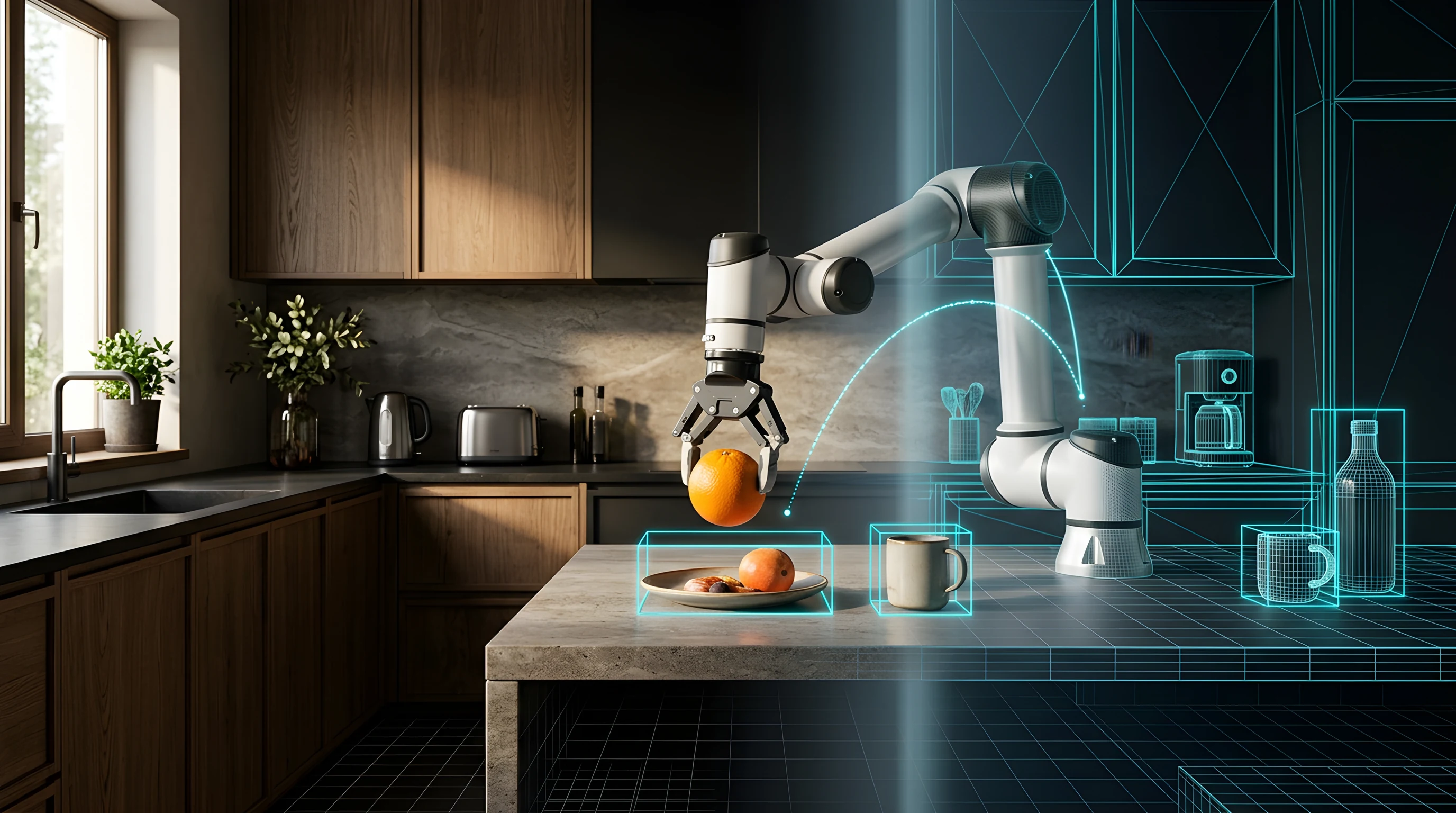
INTERFACEWorld Engine takes scenes from real experience and tasks from SkillForge task definitions; both share one task list and one verification standard.
BACKENDSWorld Engine provides simulation and real-machine environments; Crucible runs Q&A, tools, descriptions and video verification through one environment interface.
Sim screens; reality decides.
Build targeted training tasks by failure type; evaluation tasks, answers and hidden ground truth stay out of training data.
EXPERIENCE FLYWHEEL
Faster cold starts, broader verification, quicker iteration.
EGOK records runs and failures.
Data Engine versions assets.
SkillForge packages skills.
World Engine provides environments; Crucible judges independently after freezing.
Failure attribution guides targeted training tasks; evaluation tasks and answers do not feed back.
Decide against preset acceptance conditions; field experience returns.
METHODIndependent grading after freeze · Failure attribution builds targeted training tasks · Evaluation tasks and answers never enter trainingImplemented in Crucible ↗
TECHNOLOGY
One path to capability growth.